

Chinese characters and pinyin
Simplified: 熟能生巧
Traditional: 熟能生巧
Pinyin: shú néng shēng qiǎo
Literal translation
Familiarity can give birth to skill.
Natural English meaning
Repeated practice develops fluency and mastery.
Closest English equivalent
Practice makes perfect.
The Chinese saying promises skill rather than literal perfection.
When to use it
Use it to encourage regular practice of a concrete skill.
When not to use it
Practice must still be thoughtful; repetition alone can reinforce errors.
Example sentence
刚开始写汉字很慢,熟能生巧。
Writing characters feels slow at first, but practice builds skill.
Origin and cultural context
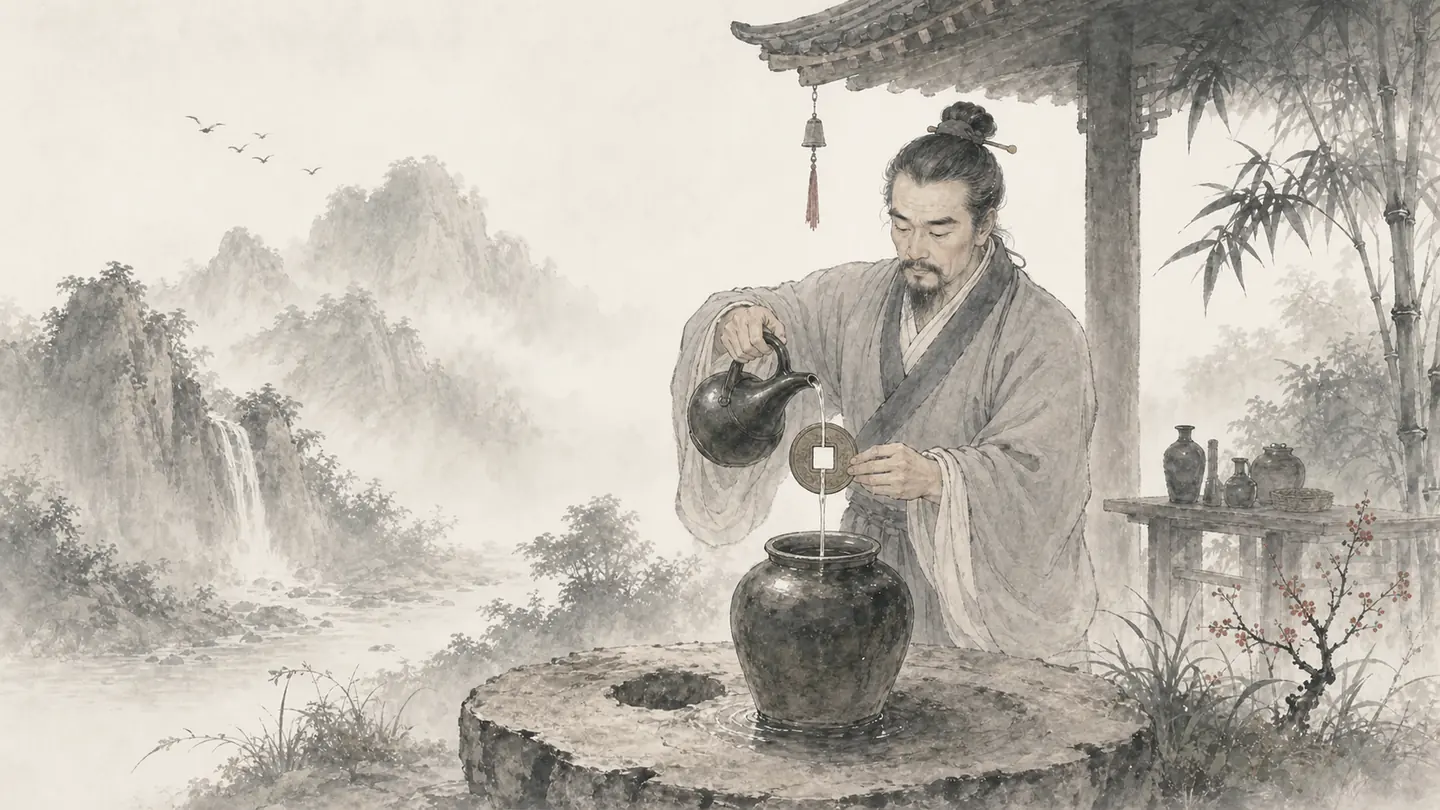
Traditionally connected with the Song-dynasty story of an oil seller whose precision came from practice.
Classification: idiom. This label distinguishes a complete proverb or popular saying from a compact idiom or a quotation preserved from a classical text.
