

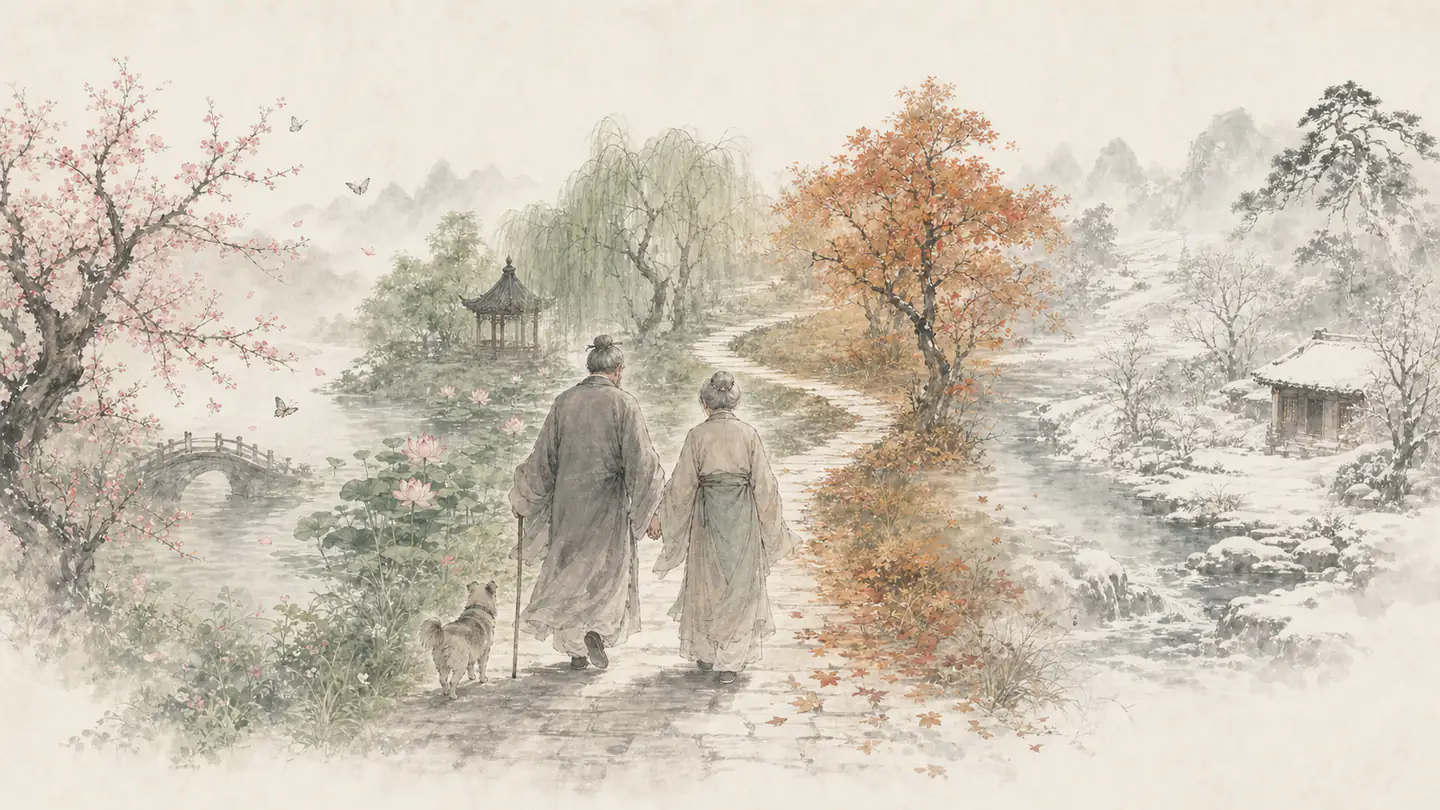
Chinese characters and pinyin
Simplified: 执子之手,与子偕老
Traditional: 執子之手,與子偕老
Pinyin: zhí zǐ zhī shǒu, yǔ zǐ xié lǎo
Literal translation
I hold your hand and grow old together with you.
Natural English meaning
In modern usage, it expresses a promise of lifelong companionship.
Closest English equivalent
To have and to hold, growing old together.
The English parallel carries a wedding-vow tone. Modern Chinese usage is similarly romantic, although the ancient poem’s original speaker and context are more complex than a simple wedding vow.
When to use it
Use it in romantic writing, wedding wishes, or a promise of lasting companionship.
When not to use it
When discussing the source text, distinguish its modern romantic reading from the poem’s original military context.
Example sentence
他们把执子之手,与子偕老写进了婚礼誓言。
They included a promise to hold hands and grow old together in their wedding vows.
Origin and cultural context
A line from the ‘Drums’ poem in the Book of Songs, later reinterpreted and widely quoted as a romantic promise.
Classification: classical quotation. This label distinguishes a complete proverb or popular saying from a compact idiom or a quotation preserved from a classical text.
