

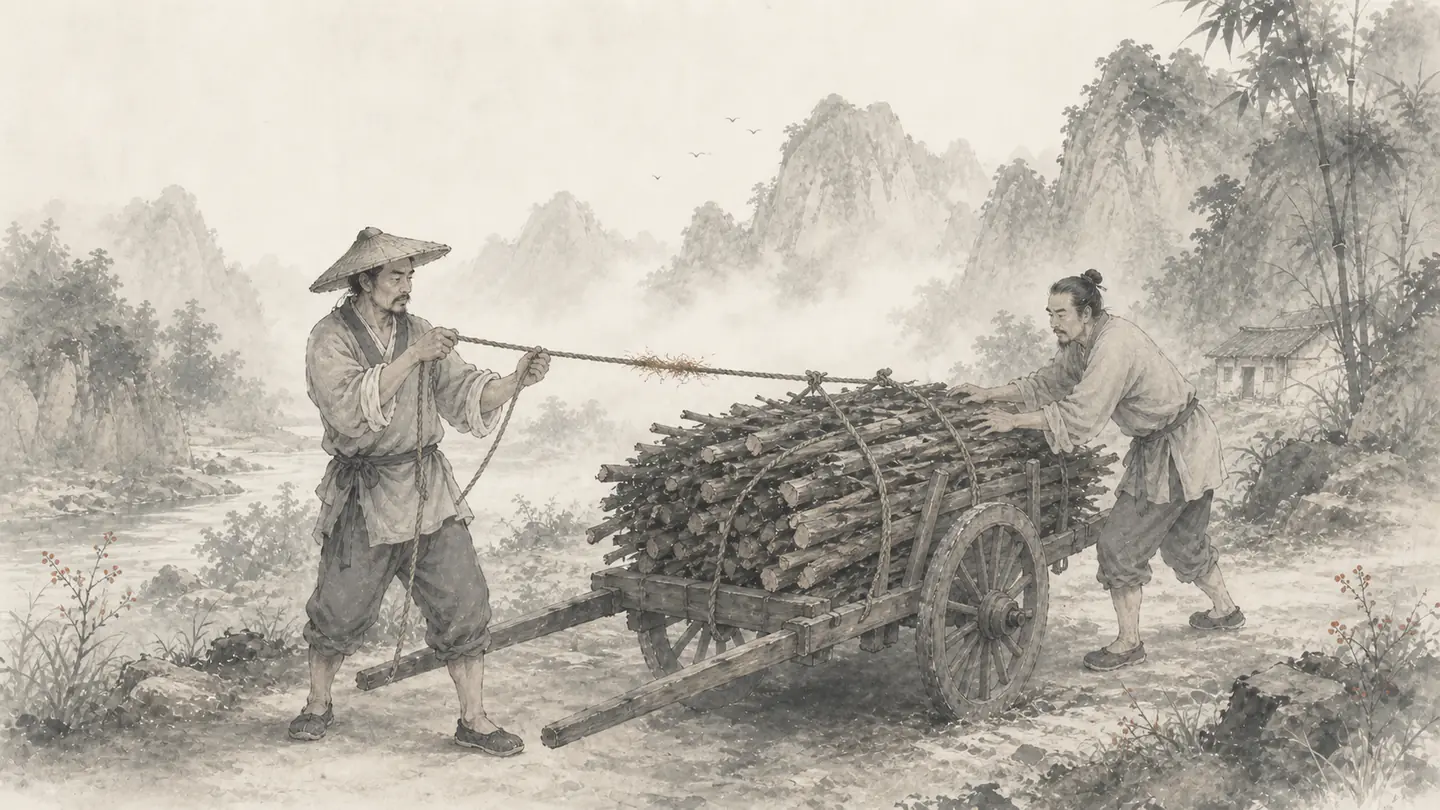
Chinese characters and pinyin
Simplified: 麻绳专挑细处断
Traditional: 麻繩專挑細處斷
Pinyin: má shéng zhuān tiāo xì chù duàn
Literal translation
A hemp rope always breaks at its thinnest place.
Natural English meaning
Weak points are the first places likely to fail under pressure, so they need attention and support.
Closest English equivalent
A chain is only as strong as its weakest link.
Both sayings focus on the weakest part of a larger whole. The Chinese image can also carry a compassionate lament that hardship tends to fall on people or places already under strain.
When to use it
Use it when identifying a fragile step in a plan, a vulnerable part of a system, or a person who needs more support before pressure increases.
When not to use it
Do not use it to blame vulnerable people for failing or to suggest that further hardship is inevitable; the useful lesson is to reinforce the weak point and share the load.
Example sentence
上线前先检查最薄弱的环节,麻绳专挑细处断。
Check the most fragile part before launch—the rope breaks where it is thinnest.
Origin and cultural context
A modern colloquial folk saying based on the way an uneven, worn hemp rope fails at its thinnest section. It often appears as the first half of a longer saying about misfortune striking people who already face hardship; no single authoritative classical source is established.
Classification: popular saying. This label distinguishes a complete proverb or popular saying from a compact idiom or a quotation preserved from a classical text.
