

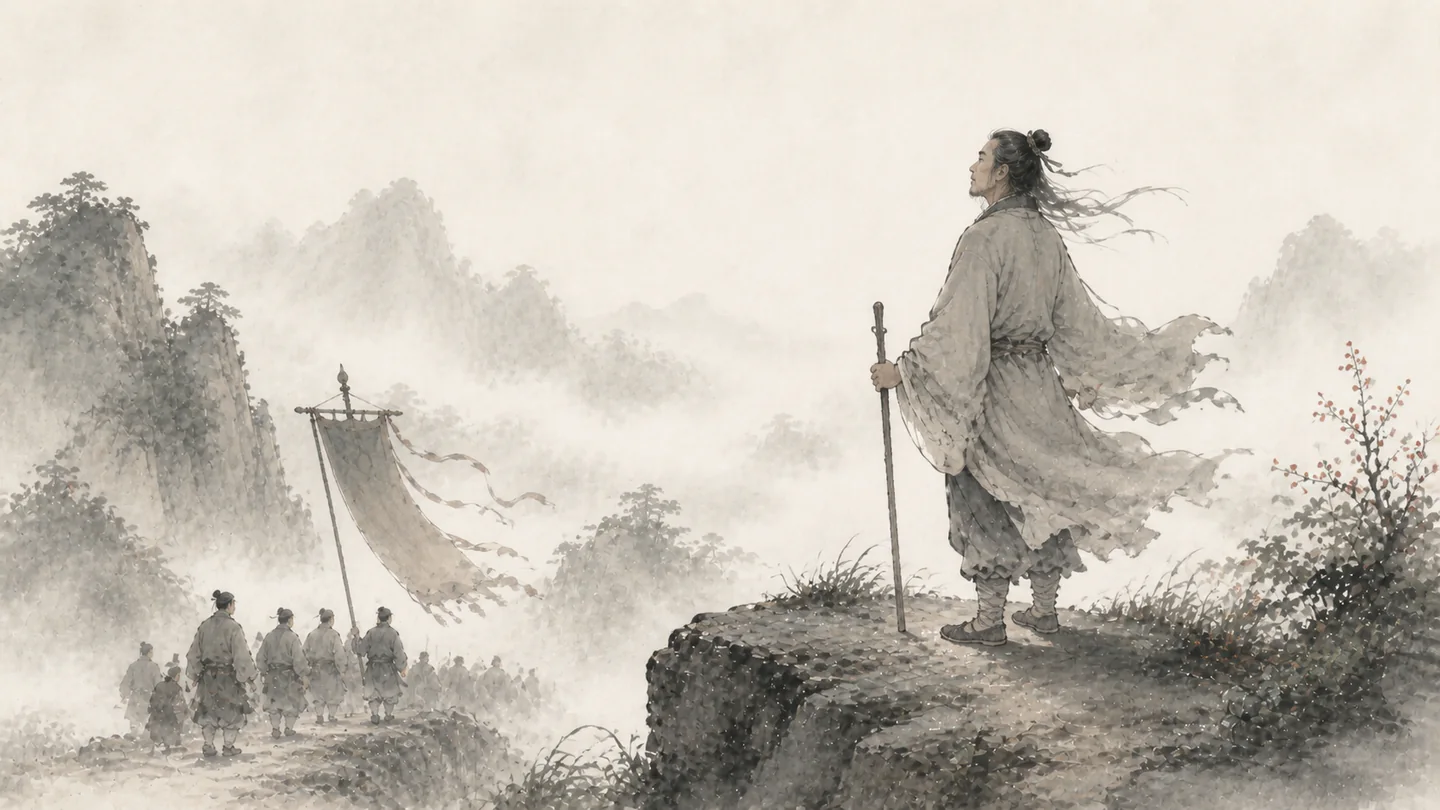
Chinese characters and pinyin
Simplified: 三军可夺帅也,匹夫不可夺志也
Traditional: 三軍可奪帥也,匹夫不可奪志也
Pinyin: sān jūn kě duó shuài yě, pǐ fū bù kě duó zhì yě
Literal translation
The commander of an army may be taken away, but the resolve of an ordinary person cannot be taken away.
Natural English meaning
Power or circumstance may remove a leader, but no one can force a person to surrender a firmly held purpose.
Closest English equivalent
You cannot take away a person’s resolve.
English has no single fixed proverb with the same contrast between military command and individual will; this rendering states its central lesson directly.
When to use it
Use it to praise moral courage or encourage someone to hold to a principled purpose under pressure.
When not to use it
Do not use it to glorify stubbornness, reckless defiance, or refusing sound evidence; the quotation praises settled resolve, not every preference.
Example sentence
面对压力,他仍坚持自己的原则,真是三军可夺帅也,匹夫不可夺志也。
Even under pressure, he held to his principles—authority can remove a leader, but it cannot seize a person’s resolve.
Origin and cultural context
From Analects 9.26 in the chapter Zi Han, where Confucius contrasts an army whose commander may be taken with an ordinary person whose settled resolve cannot be taken away.
Classification: classical quotation. This label distinguishes a complete proverb or popular saying from a compact idiom or a quotation preserved from a classical text.
